
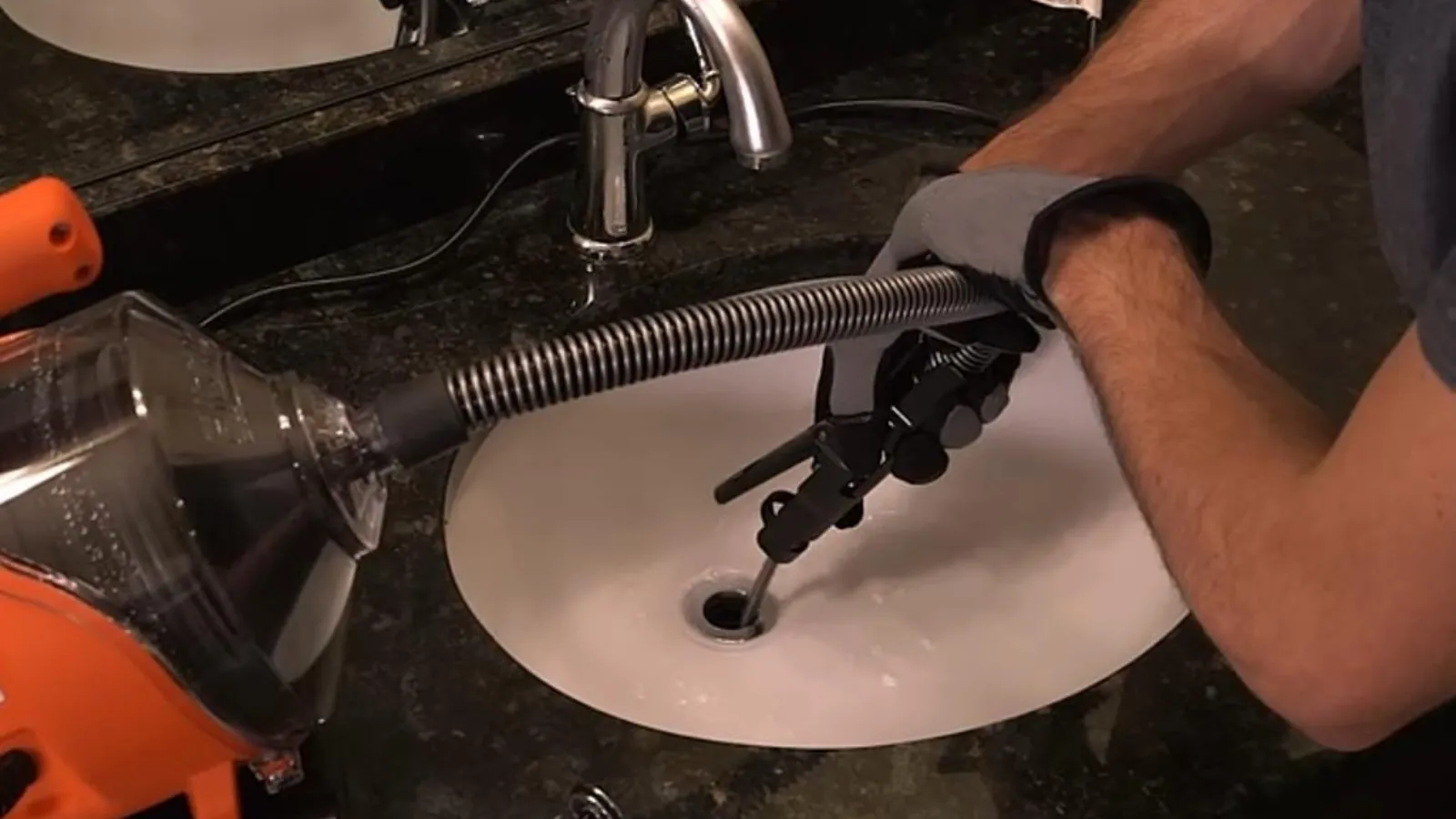
Drain cleaning in Chino, CA means removing whatever is blocking a pipe and then proving that water runs freely again. The blockage might be grease and food scraps in a kitchen line, hair and soap in a tub, wipes or tree roots in the main sewer, or a damaged section that no tool will clear. Which one you have decides the method, the time on site and the price, so a good plumber diagnoses first and cuts second.
Most clogs announce themselves the same way: a sink that drains slowly for a week, a gurgle from the toilet when the washer empties, or water that simply stops moving.
When a clogged drain is an emergency
Treat a drain as an emergency when sewage rises through a floor drain or tub, when every fixture in the house is slow at the same moment, or when a sink is overflowing onto flooring. While you wait for the plumber, take these steps.
- Stop running water. Pause the washing machine and dishwasher and hold off on flushing, because every gallon has nowhere to go.
- Keep children and pets out of any standing water, which may contain sewage.
- Skip chemical drain openers. They rarely clear a solid blockage, and the standing liquid can splash and burn skin during the repair.
- Move rugs, boxes and electronics away from the lowest drain in the house, usually a tub, shower or floor drain.
- If you know where the main cleanout cap is, leave it closed until the plumber arrives, since opening it under pressure can release a surge.
Single fixture or main line? How to tell
A clog in one sink or one tub is a branch problem. The rest of the house drains normally, and the fix is usually a cable run through that fixture's trap and arm. A clog in the main sewer line behaves differently. Water backs up into the lowest drains first, so a tub or floor drain gurgles or fills when the toilet is flushed or the washer discharges.
That difference matters for the visit. A branch clog is often a short job. A main line stoppage needs access through a cleanout or a pulled toilet, a longer cable or a jetter, and sometimes a camera pass to see what caused it.
Kitchen sink clogs
Kitchen lines are small, usually 1.5 inches across, and they collect cooking grease that cools into a waxy lining. Food particles stick to it and the opening shrinks until the sink stands full. A garbage disposal can hide the problem, because the clog often sits past the disposal in the trap arm or the wall stub.
Cabling clears the plug, but the grease on the pipe walls stays behind and the clog tends to return within weeks. For a line that keeps filling, a plumber may recommend hydro jetting, covered on our hydro jetting page. Pouring grease into a can instead of the drain does more to prevent repeats than any product.
| What you see | Likely cause | Usual first step |
|---|---|---|
| One sink drains slowly | Grease, hair or soap film in the branch line | Cable the fixture trap and arm |
| Tub gurgles when the toilet flushes | Partial blockage in the main sewer line | Cable through the cleanout, then inspect |
| Every fixture is slow at once | Main line stoppage or roots | Emergency visit with a main line cable or jetter |
| Drain clears, then clogs again in weeks | Residue on pipe walls or a damaged section | Hydro jetting and a camera pass |
| Sewage in a floor drain | Full main line backup | Stop water use and call us |
Drain backing up right now?
Snaking, cabling and when jetting is better
A drain cable, often called a snake, either hooks the blockage or bores a hole through it. That restores flow quickly and costs less than most alternatives. It also has limits. A cable can leave a narrow channel through a thick mass of roots or scale, and the line may clog again.
If a previous cable run stalled at a certain distance, mention it. A stall at the same spot twice often points to a bellied section, a broken joint or a root mass, and that is when a camera inspection earns its cost. Our sewer inspection page explains what the camera shows.
Tub, shower and bathroom sink drains
Bathroom drains clog with hair wrapped in soap film, usually within a few inches of the drain opening. A plastic drain strip or a pulled stopper often removes it without tools. If water still pools after that, the blockage sits deeper in the trap or in the shared bathroom branch, and a cable is the next step.
A drain that stays slow after cleaning can also leak at a joint under the floor. Dampness on a ceiling below, or a musty smell near the tub, points that way and should be checked before the next repair.
What decides the price of drain cleaning
What moves the price
Drain work is priced by the problem, not by a flat menu, so a clear number comes after the plumber sees which line is blocked. These are the factors that move it.
Drain cleaning questions from Chino homeowners
Yes.
It is best to avoid it. Chemical openers rarely clear a solid plug, and if they fail, the standing liquid is a hazard for whoever works on the line next. Tell the plumber if you already used one.
Several fixtures act up together, the lowest drain in the house backs up first, or the toilet and tub gurgle when other water runs. One slow sink alone is usually a branch clog.
Repeat clogs usually mean residue is left on the pipe wall, roots are entering a joint, or a section has sagged and holds water. A camera inspection tells you which one.
Yes.
Yes. See the Chino Hills plumbing page for neighborhoods and ZIP code 91709.
Older parts of Chino, a town first subdivided in 1887, can have aging drain lines, while newer tracts use plastic pipe that behaves differently. If clogs keep returning, ask for a camera look instead of another quick cable run. Related work includes sewer line cleaning for the main line and toilet repair when only the toilet is affected.
Replacement drain sections are plastic pipe made to ASTM D2665 (PVC) or ASTM D2661 (ABS), as the California Plumbing Code (based on the Uniform Plumbing Code, UPC) allows.