
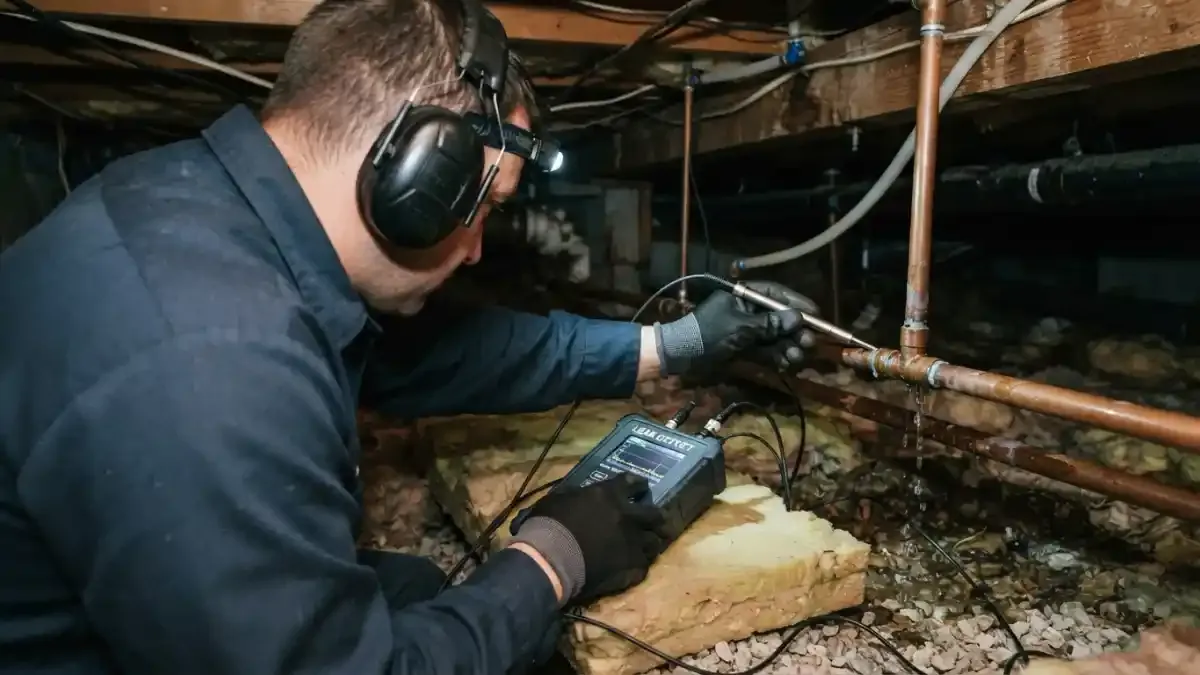
Leak detection in Chino, CA is the work of finding a leak without tearing up the house to look for it. The usual signs are a water bill that climbs without explanation or a meter that turns when every fixture is off. Others are a damp spot on a ceiling or wall, a warm patch on the floor, a musty smell, or the sound of water running when nothing is on. Locating the leak first saves demolition, and often the repair is smaller than expected.
Many callers do not know where the water is going, only that something is wrong. That is normal, and it is how the job begins.
When a hidden leak is an emergency
Water coming through a ceiling, running down a wall or pooling under a floor cannot wait. Take these steps while you wait.
- Shut off the main water valve, usually near the street side of the house or at the meter.
- Switch off power to affected rooms at the breaker if water is near outlets, but only if the panel is dry.
- Move furniture and belongings away from the wet area and lay down towels.
- Photograph the damage and note when you first saw it for any insurance claim.
- Check the water meter after shutting off the main. If it still moves, the leak is in the line between the meter and the house.
The meter test: is there really a leak?
Turn off every fixture, appliance and irrigation timer, then look at your water meter. Most meters have a small leak indicator, a triangle or a dial that spins when even a trickle passes. If it moves, water is going somewhere. Write the reading, wait 30 minutes with nothing running, and check again.
Next, close the main valve at the house. If the meter stops, the leak is inside the house. If it keeps moving, the leak is outside the house on the service line. That single test tells the plumber where to start and is worth doing before the visit.
High water bill with no visible leak
A bill that climbs for several cycles often means a running toilet, a dripping irrigation valve or a slab leak. Toilets are the most common culprit. Put a few drops of food coloring in the tank and wait 15 minutes without flushing. If color shows in the bowl, the flapper is leaking. Our toilet repair page covers the fix.
If the toilets pass, the plumber moves to pressure testing the lines, listening to pipes with electronic equipment and checking appliance connections.
Ceiling, wall and attic leaks
A stain on the ceiling is where the water showed up, not always where it began. It can travel along a joist before dripping. A moisture meter and a thermal camera show the wet area behind drywall, and the plumber traces back along the pipe run. Bathrooms above, roof penetrations and HVAC condensate lines are all possible sources, and plumbers separate plumbing causes from the others.
| Symptom | Probable location | First check |
|---|---|---|
| Meter moves with everything off | Toilet, service line or slab | Main valve test |
| Warm spot on the floor | Hot water line under the slab | Shut off the water heater and listen |
| Ceiling stain | Pipe above, bath or roof | Moisture and thermal scan |
| Low water pressure | Service line or fixture leak | Pressure gauge test |
| Wet lawn spot | Irrigation or service line | Isolate the irrigation first |
Suspect a hidden leak?
Call now.
Slab and under-house leaks
Pipes under a concrete slab leak quietly. Warm spots on the floor, a hissing sound, wet baseboards or a constant hum from the water heater circulating can all be signs. Raised foundations have crawlspaces where leaks can rot wood for years. Our slab leak repair page explains how access and repair are handled.
Yard, irrigation and service line leaks
Green patches in a dry lawn, a soggy spot near the meter box or a drop in pressure at the street side can mean a service line leak. Irrigation systems leak at valves and sprinkler heads. See water line repair and replacement for the line from the meter to the house.
Pools, spas and commercial properties
Pool and spa leaks follow a bucket test and a pressure test of the plumbing, while a commercial property usually needs access coordination with a property manager. Leak detection for business sites also tracks water use over time to find night-time flow.
What leak detection costs depend on
What moves the price
The first quote usually covers finding the leak. Repair is quoted once the location is known.
Leak detection questions from Chino
Yes.
Shut off all water use and watch for movement on the leak indicator. Then close the main valve and see whether it stops.
Often yes. Acoustic, thermal and pressure methods narrow the location before any cutting.
Possibly. Check toilets and irrigation first, then call if the meter still moves.
Yes. See also commercial plumbing.
Yes. See the Chino Hills page.
Finding a leak is step one. Repairs may include burst pipe repair on an exposed line or a repipe when the pipe is failing in many places. Pipe that develops pinholes in several spots is often near the end of its life.
Repairs after a leak is located use fittings certified to NSF/ANSI 61 for drinking water contact.