
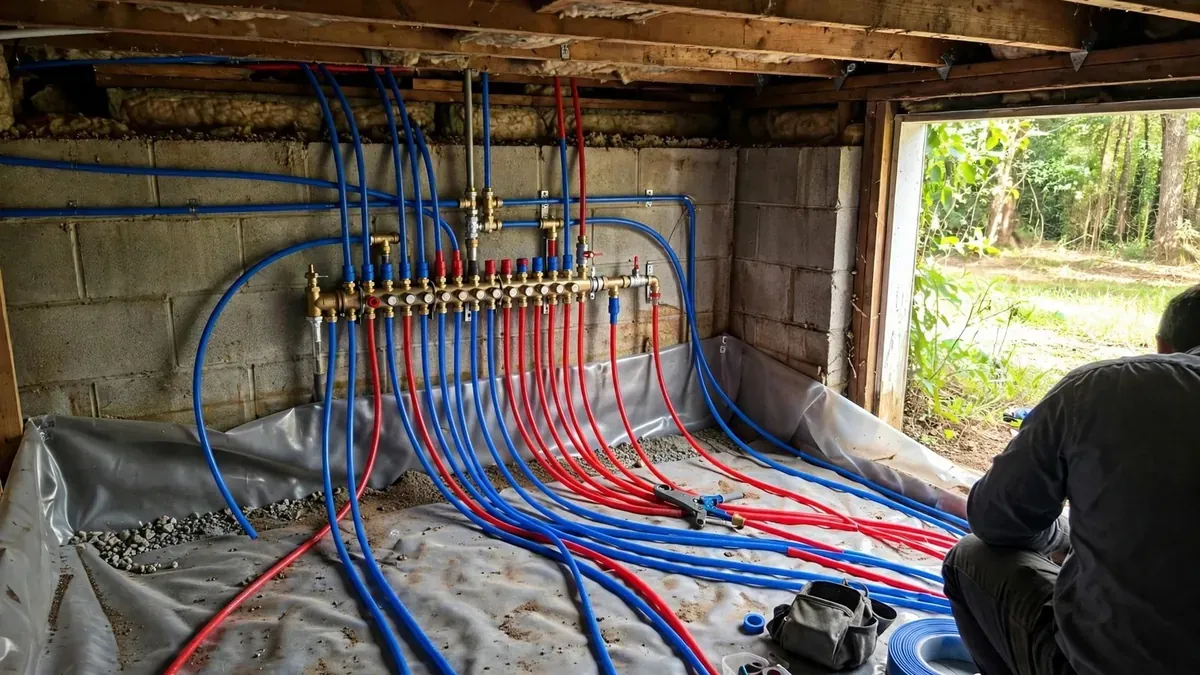
PEX stands for cross-linked polyethylene. It is a flexible tube that carries hot and cold water, and it comes in coils of different colors. Red is used for hot lines and blue for cold, though the color does not change how the pipe works. Because it bends around corners, a plumber can run it with far fewer joints than rigid copper.
That flexibility is the reason PEX has become common in new construction and in whole-house repipes. It resists corrosion, handles minor freezing better than copper and goes in faster. It also has rules about where it can be used and how it must be connected, so a little background helps before you buy anything.
PEX-A, PEX-B and PEX-C
The letters describe the manufacturing method. PEX-A is the most flexible and can be expanded and then shrinks back around a fitting. PEX-B is stiffer and usually joined with crimp or clamp rings. PEX-C is less common in plumbing supply stores. All three are used for potable water when they carry the proper certification markings printed on the pipe.
Check the markings before you buy. A pipe meant for radiant floor heating may not carry drinking water approval. The label should show a potable water rating and the standards it meets.
How PEX is connected
Three methods dominate. Crimp rings are copper bands squeezed around a barbed fitting with a crimp tool. Clamp rings are stainless steel bands tightened with a cinch tool. Expansion fittings use PEX-A: the pipe end is expanded with a tool, the fitting is inserted and the pipe shrinks back to grip it.
Push-to-connect fittings need no tool at all. They are convenient for repairs and tight spots. Many plumbers prefer expansion or crimp connections for concealed locations because they are well proven, and use push-fit where access is easy.
Where PEX works well
PEX suits supply lines in walls, attics and crawlspaces, repipes where the old pipe has failed, and runs to remote fixtures. A home-run manifold system gives each fixture its own line from a central manifold, which keeps pressure steadier when two fixtures run at once.
It does not suit outdoor use in sunlight, because ultraviolet light damages it. It should also stay clear of gas heaters' flue areas and recessed light fixtures that run hot, and it needs a proper transition when it meets a water heater, as the manufacturer and code specify.
| Method | Tool needed | Best use |
|---|---|---|
| Crimp ring | Crimp tool | Concealed runs, reliable connections |
| Clamp ring | Cinch tool | Common for PEX-B, easy to inspect |
| Expansion | Expander tool, PEX-A only | Full-flow fittings in new work |
| Push-to-connect | None | Repairs and tight spots with easy access |
Stuck on this job?
Call and tell us about your plumbing issue.
Limits and cautions
PEX can be damaged by solvents, certain pipe thread sealants and pests, and it can kink if bent too sharply. It must be supported at set intervals so it does not sag. Some people notice a plastic taste in new lines, which usually fades with flushing. Always follow the manufacturer instructions and local code.
DIY or hire a plumber
A homeowner can run a short extension with the right tools. Whole-house repiping is a larger job, and it needs permits and inspections. See our repiping page for how that works, and our plumbing installation page for new fixtures and lines.
Planning a run before you cut
Sketch the layout first. Measure each run from the source to the fixture and add a few inches for bends and connections. Keep the bend radius gentle, about six times the outside diameter of the pipe for most PEX, and use support clips or hangers every few feet so the line does not sag.
Protect the pipe where it passes through studs, with grommets or sleeves where code requires them, and leave a little slack for expansion. Hot lines grow slightly as they heat. A tight, straight run with no slack can groan or rub at the framing.
Testing the finished work
Before closing a wall, cap the ends and test the system under pressure for the time your inspector specifies. Watch the gauge for any drop and check each connection by eye. A single weeping fitting caught at this stage costs an afternoon, while one found behind a finished wall costs a lot more.
PEX and building rules in Chino
California's plumbing code has allowed PEX for potable water for many years, but local departments enforce it. Before you repipe or add a line, call the City of Chino Building Division at (909) 334-3251, at 13220 Central Avenue, Chino, CA 91710, to ask which permits apply.
Many Chino Hills homes were built in the 1980s and early 1990s, and some from the late 1970s to mid-1990s used polybutylene supply pipe that is known to fail. If you have gray or blue plastic pipe at the water heater, a repipe in PEX is a common answer. See our Chino Hills page for coverage.
Pipe materials and joints must meet the California Plumbing Code, which is built on the Uniform Plumbing Code (UPC), and PEX tubing is made to ASTM F876.
Questions about this job
PEX that carries a potable water certification is approved for drinking water lines. Check the markings on the pipe.
It tolerates freezing better than copper because it expands, but it can still be damaged, so insulate exposed lines.
Yes, with the right transition fittings. Follow the manufacturer's directions.
Manufacturers rate it for decades under normal conditions. Sunlight and chemicals shorten the life.