
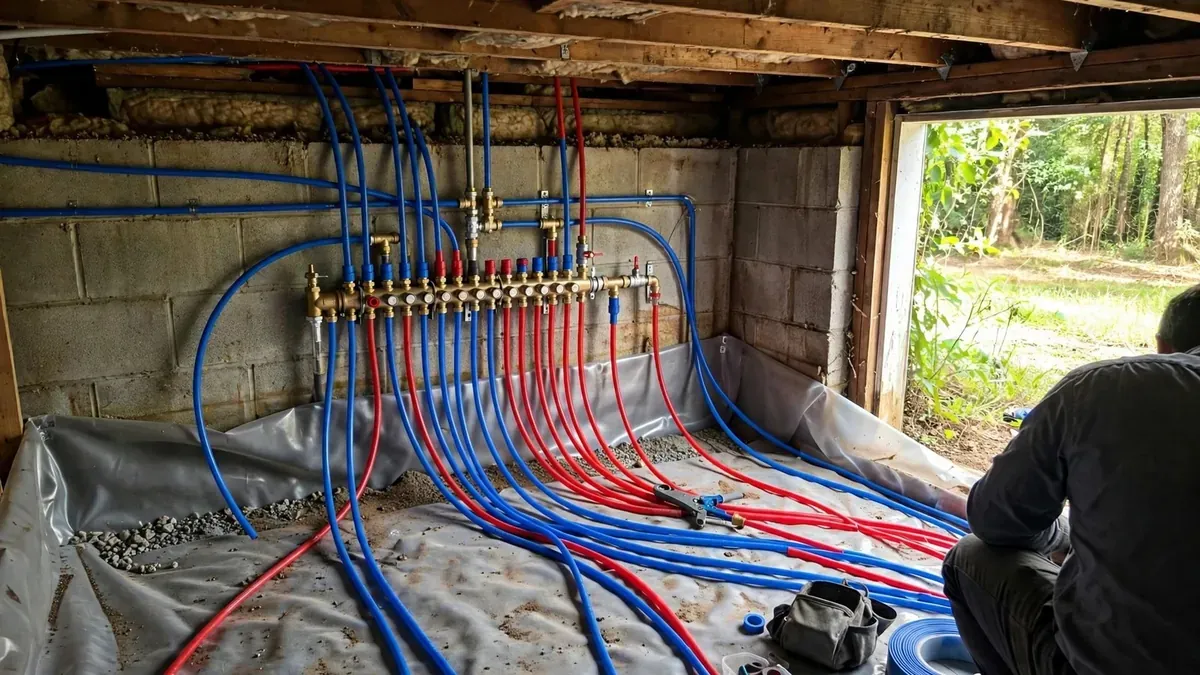
Repiping in Chino, CA means replacing the water supply pipes inside your home, hot and cold, with new material. It is a major job, done when the pipes fail faster than they can be patched. Signs are repeated pinhole leaks, discolored or metallic-tasting water, low pressure that cleaning does not fix, visible corrosion at joints and rusty stains on walls or ceilings.
Homes built decades ago may have galvanized steel or early copper, and some homes from the 1970s through the 1990s had polybutylene. Each ages differently, and a plumber can identify yours with a short inspection.
Which pipes are failing?
Galvanized steel rusts from the inside, narrowing the pipe until pressure drops and water turns brown. Copper can develop pinholes from water chemistry or erosion, especially in hot lines. Polybutylene, a gray or blue plastic common in some homes of the 1978 to 1995 era, can fail at fittings. Look in the garage, under sinks and near the water heater to see what you have.
PEX or copper?
PEX is flexible plastic tubing that is quick to install, resists freezing damage and does not corrode. Copper lasts for decades, is familiar and is recyclable, but costs more in materials and labor. Both work well. Our PEX basics guide covers connection types and where PEX does and does not belong. A plumber can price both so you can compare.
How a repipe is done
The plumber shuts off water, plans routes through walls, attic and crawlspace, cuts small access holes in drywall, runs new lines and connects every fixture, then tests the system under pressure before closing the walls. The house is without water for part of one or more days, and drywall patching follows. Many repipes take two to five days depending on size.
Slab homes are handled by rerouting lines overhead or through walls instead of breaking the slab. Our slab leak repair page covers the related options.
| Material | Strength | Watch for |
|---|---|---|
| PEX | Flexible, fast to install, no corrosion | UV exposure and some rodent damage |
| Copper | Long life, proven | Cost and pinholes in aggressive water |
| Galvanized steel | Existing in older homes | Internal rust and low flow |
| Polybutylene | Existing in some 1978 to 1995 homes | Fitting failures |
Ready to plan a repipe?
Repipe or repair?
A single failed pipe in an otherwise healthy system is a repair. Three leaks in two years is a pattern. If the next repair costs a fair share of a repipe, the repipe is the better value. A plumber can test for pressure loss and examine the pipe condition at a cut section to guide the decision.
Permits and inspection
Repiping is not minor work. Ask the City of Chino Building Division at (909) 334-3251 how permits and inspections are handled for your address. The California Plumbing Code, built on the Uniform Plumbing Code, sets the technical rules inspectors apply.
What a repipe quote depends on
What moves the price
These factors move it.
Repiping questions
Many homes take two to five days, depending on size and access.
Usually not, though water is off for part of each day. Ask your plumber for a schedule.
PEX approved for potable water is widely used. Check that the product is rated for drinking water.
If the cause is corroded supply pipe, yes. A pressure test confirms the diagnosis.
Yes. See the Chino Hills page.
Safety steps while a leaking line waits for repair
Close the main water valve if a pinhole leak is spraying or soaking a wall. Keep electrical outlets and appliances near the wet area switched off at the breaker if you can reach it dry. Do not cut into a wet wall yourself, because pipe, wiring and framing sit close together.
For a single failed line, a repair like burst pipe repair may be enough. For the line from the meter, see water line repair and replacement.
PEX pipe for drinking water is made to ASTM F876, and copper uses fittings rated for potable water under the California Plumbing Code (based on the Uniform Plumbing Code, UPC).