
A toilet that will not clear and a bowl that rises toward the rim is a stressful moment. Stay calm and do not flush again. Each flush adds water with nowhere to go. Take the lid off the tank and lift the flapper or close the supply valve to stop the tank from refilling, so the bowl does not overflow while you work.
Most clogs are in the toilet's own trap, a curved passage built into the porcelain. Toilet paper, too much of it at once, is the most common cause. The tools below clear the vast majority. If none of them work, the problem probably lies further down the line.
Use the right plunger
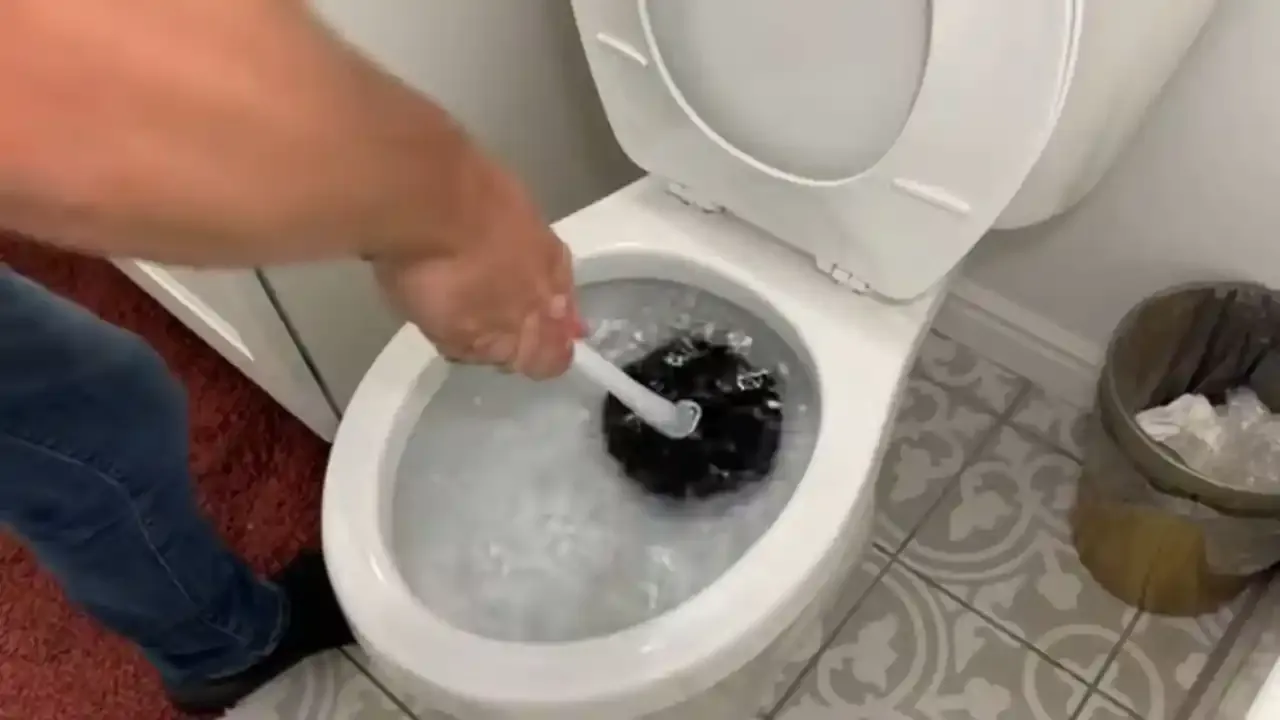
A flat-bottomed cup plunger works for sinks and tubs, but a toilet needs a flange plunger, which has a rubber sleeve that fits into the drain opening. Put on rubber gloves and make sure there is enough water in the bowl to cover the plunger head. Add water if the level is low.
Seat the plunger so the sleeve sits in the drain, push down gently first to expel the air, then pump firmly and steadily for fifteen to twenty seconds. Pull up sharply on the last stroke. The suction does the work. The water should drain with a gurgle.
Hot water and dish soap
If plunging does not help, pour a generous squirt of dish soap into the bowl and let it sit for ten minutes. The soap lubricates the blockage. Then add a bucket of hot tap water poured from waist height, not boiling water, because very hot water can crack porcelain. Wait and try the plunger again.
The closet auger
A closet auger, also called a toilet auger, is a short cable inside a rigid tube with a rubber sleeve that protects the porcelain. Feed the end into the drain, crank the handle to push the cable through the bend and break up or hook the blockage. Retract it slowly and clean the cable. Flush gently to test.
Avoid using a long drain snake on a toilet unless you know how, because it can scratch the bowl.
| Tool | When to use | Caution |
|---|---|---|
| Flange plunger | First step for most clogs | Needs enough water in the bowl |
| Dish soap and warm water | Soft clogs, paper | Do not use boiling water |
| Closet auger | Stubborn clogs after plunging | Use the rubber guard to protect porcelain |
| Professional cable or jetter | Main line clogs, repeat clogs | Call a plumber |
Stuck on this job?
Call and tell us about your plumbing issue.
What not to do
Chemical drain openers are a poor choice for toilets. They can sit in the bowl without reaching the clog, damage the pipes and splash onto skin when you plunge. Never flush wipes labeled flushable, since they rarely break down. Toys and small objects usually need the toilet pulled up to retrieve.
When the toilet is not the problem
If other fixtures gurgle or back up when you flush, or if a second toilet is also slow, the clog is in the main line. That needs a longer cable or a jetter and sometimes a camera. A toilet that clogs repeatedly with no obvious cause can have a partial blockage or a vent problem too. Our drain cleaning page and toilet repair page describe what a visit covers.
Protect the floor and yourself
Lay old towels or a plastic sheet around the base of the toilet before you start, wear rubber gloves, and keep a mop and a bucket nearby. If sewage may have reached the floor, wash your hands thoroughly afterward and clean surfaces with a disinfectant. Keep children and pets away until the area is clean and dry.
Preventing the next clog
Flush only human waste and toilet paper. Wipes, paper towels, cotton swabs and feminine products do not break down in time. Use less paper per flush, flush twice if you must, and fix a weak flush by checking that the tank fills fully and the flapper lifts all the way. A toilet that clogs every few weeks needs a plumber's look.
Toilet clogs and the main line in Chino
In older parts of Chino, around the downtown streets near the Chino Transit Center at 6th Street and Chino Avenue, sewer laterals are older and more prone to roots. If your toilet clogs along with the tub or the washer drain backing up, the main line is a suspect.
Sewage backups are urgent. For homes west of the city line, see our emergency plumber Chino Hills page.
Questions about this job
No. Boiling water can crack the porcelain. Use hot tap water instead.
A weak flush, an older low-quality fixture, too much paper or a partial blockage downstream can all be causes.
No. A toilet auger is shorter and has a protective sleeve for the porcelain.
When sewage backs up into other drains or floods the bathroom, stop water use and call right away.