
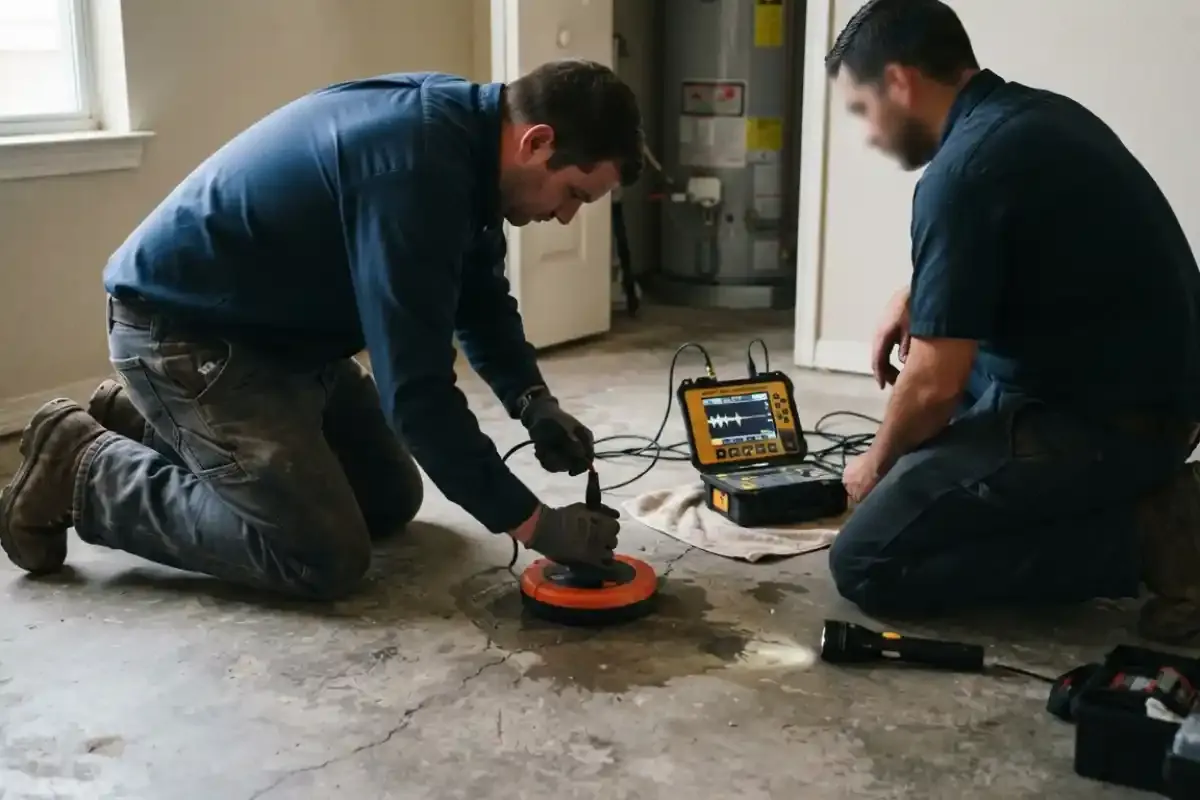
Slab leak repair in Chino, CA addresses leaks in water lines that run under or inside a concrete slab foundation. Many homes in the Chino area are built on slabs, and the supply lines can sit in or just below the concrete. When one of those pipes corrodes or is rubbed through by soil movement, water escapes into the ground and the slab, damaging flooring and raising the bill.
Signs include a warm spot on the floor, the sound of running water when nothing is on, damp carpet or baseboards, a spinning water meter with all fixtures off, and a water heater that never rests. If you notice more than one, call.
When a slab leak is an emergency
Water coming up through the floor, wet flooring spreading or a water meter spinning quickly is urgent. While you wait for the plumber, do the following.
- Close the main water valve to stop the flow. Find it at the meter or where the line enters the house.
- Turn off the water heater at the breaker or gas control so it does not run dry.
- Lift rugs and valuables off the damp floor and open windows for air.
- Check the water meter after shutoff. If it stops, the leak is inside the house.
- Photograph the damage and note when you first noticed the signs.
Locating the leak without tearing up the floor
Plumbers combine methods. A pressure test of each line isolates which pipe is losing water. Electronic listening equipment picks up the sound of water escaping through the slab. A thermal camera shows warm spots from hot water lines. The plumber marks the spot and measures the depth, and the repair starts there. Our leak detection page describes the process in more detail.
Three repair paths
A spot repair cuts a small hole in the slab above the leak, repairs the pipe and patches the concrete. A reroute abandons the leaking line and runs a new one overhead through the attic or walls. A repipe replaces many lines when the system is failing everywhere. Which fits depends on the number of leaks, the pipe material and the layout. See repiping for the larger option.
Why slabs leak
Copper pipe can pit from the outside where it contacts concrete or from the inside because of water chemistry. Movement from soil shifting can rub lines against hard edges. Hot water lines leak more often because heat speeds corrosion. Newer homes with PEX under the slab see fewer corrosion leaks but can still have fitting failures.
| Option | Best for | Disruption |
|---|---|---|
| Spot repair | One accessible leak | Small hole in the floor |
| Reroute overhead | Repeated slab leaks or hard-to-reach lines | Drywall openings |
| Repipe | Failing pipe throughout | Several days of work |
| Monitor and test | Early signs without proof | None, but delay can add damage |
Water under your floor?
Water heaters and slab homes
Many slab-home water heaters sit in the garage on the slab edge. Leaks near the heater can come from the tank, the connections or the lines in the slab. A plumber separates them. See water heater repair if the tank is the source.
Insurance and documentation
Many policies cover damage from a sudden leak but not the pipe repair itself, and some limit coverage for slab leaks. Document everything, keep the plumber's report and call your agent early.
What slab leak repair prices depend on
What moves the price
Slab leak questions
Yes.
A warm floor spot, a running-water sound, damp flooring and a moving water meter are the main signs.
Not always. One leak in sound pipe may be a spot repair. Several leaks suggest a larger plan.
A spot repair opens a small area. A reroute avoids the slab entirely.
Yes. See the Chino Hills page.
What to do while you wait for a slab leak visit
Close the main water valve if the floor is warm or wet and the meter keeps moving. Do not pull up flooring or break the slab yourself. Keep children and pets off wet floors. Switch off power to wet areas only if the breaker is dry and easy to reach.
For related problems, see water line repair when the leak is on the service line, or the planned plumbing installation options for rerouted piping.
Repair or reroute work on a water line needs a permit in most cases, and pipe and fittings should be certified to NSF/ANSI 61.