
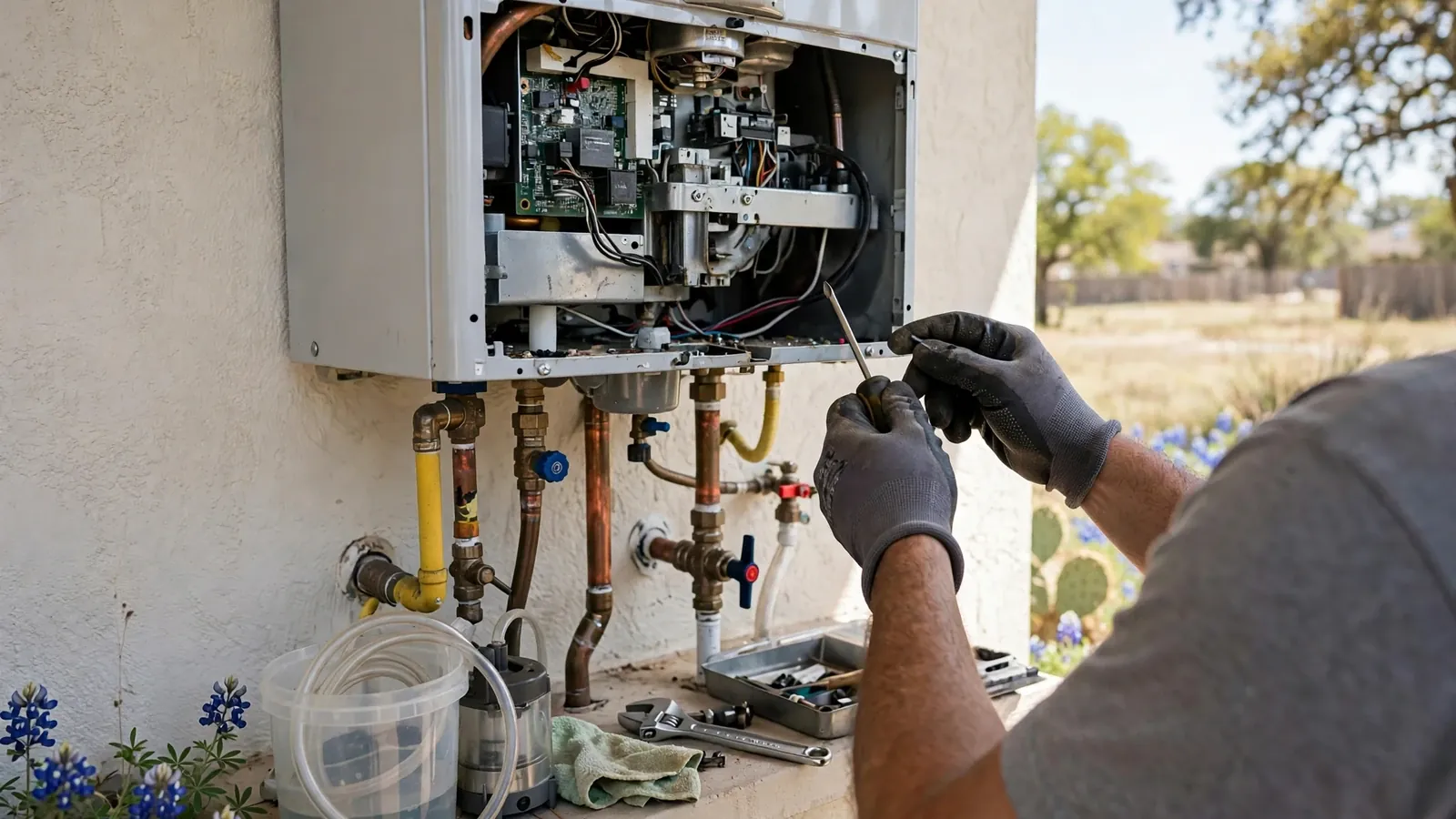
A tankless water heater, also called an on-demand heater, warms water only when a tap opens. That removes the standby loss of a tank and the risk of a 50 gallon tank letting go in a closet. Tankless water heater service in Chino, CA covers three jobs: installing a new unit, repairing a fault, and the maintenance flush that keeps one running for 15 to 20 years.
Most service calls come from the same cause. Mineral scale builds on the heat exchanger and the unit slows, throws an error code or shuts down. A flush with a descaling solution clears it, and doing it on schedule prevents most breakdowns.
Flush and descale: the job that matters most
A flush circulates a mild acid, usually white vinegar or a manufacturer-approved descaler, through the heat exchanger for 45 minutes to an hour. Then fresh water rinses it out. Units in hard water areas benefit from a yearly flush, and some manufacturers call for it in their warranty terms.
Test your tap or ask your water provider for its annual water quality report to see how hard your water runs. If scale is heavy, a softener upstream of the heater protects it. See our water softener and filtration page.
Inlet screens and filters
Most tankless units have a small inlet filter that catches debris before it reaches the heat exchanger. It clogs gradually, flow drops, and the unit may fault. Cleaning it takes a few minutes with the water shut off. Our filter replacement guide shows where the screen sits on common models.
Common faults and what they mean
Error codes vary by brand but fall into a few families: ignition failure, flame loss, exhaust temperature, flow too low, and scale. A unit that fires and then shuts down after a few seconds is often starved for gas or air. A unit that runs hot and cold may have a failing flow sensor or a blocked cold inlet.
Before you call, note the code on the display and when the problem started. A repair may be as simple as a cleaned sensor or as involved as a new heat exchanger.
| Task | How often | What it prevents |
|---|---|---|
| Flush and descale | Yearly in hard water, ask your manufacturer | Scale, error codes, shutdowns |
| Clean inlet screen | Every few months | Low flow and faults |
| Check venting and gas connection | Yearly | Combustion and safety problems |
| Inspect condensate drain (condensing units) | Yearly | Water backup in the unit |
Tankless unit throwing codes?
Switching from a tank to tankless
The swap is not always plug and play. Gas tankless units draw far more gas per hour than a tank burner, so the gas line and meter may need upgrading. Venting often changes to a specific material and routing. Electric units need a large circuit, which may require a panel upgrade. A plumber reviews all three before quoting.
For emergency swaps, see water heater replacement. For planned work, installation is the page to read.
Recirculation and long waits
Tankless units heat quickly, but water already sitting in the pipe is cold. A recirculation loop or a small buffer tank shortens the wait to hot water at distant fixtures. If your kitchen is far from the heater, ask about a recirculation pump.
Tankless pricing: what moves the number
What moves the price
Service and install prices depend on the unit and the home.
Tankless water heater questions
Many manufacturers suggest once a year, and hard water raises the need. Check your manual and the warranty.
They cut standby heat loss, but savings depend on your usage and the install cost. Our savings guide breaks it down.
Scale, a clogged inlet screen, a failing flow sensor or low flow at the fixture are the usual causes.
Often yes, but gas line size, venting and electrical capacity must be checked first.
Yes. See the Chino Hills page.
A tankless unit with a failing heat exchanger can sometimes be repaired, but at some age replacement is wiser. If you are weighing options, water heater repair explains how repair costs compare.
Tankless gas units are certified to ANSI Z21.10.3, and their vent material must be the type the manufacturer lists.