
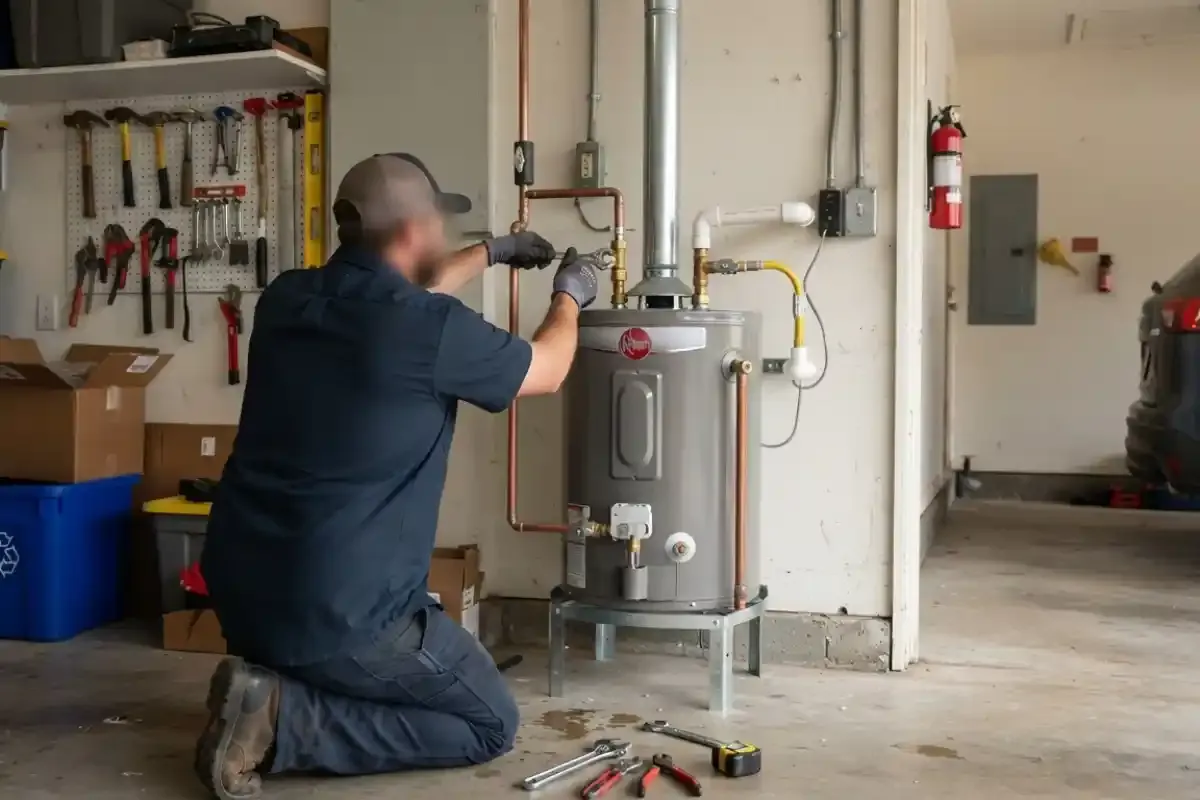
Water heater installation in Chino, CA is a planned job, unlike a midnight replacement. Done well, it lasts a decade or more and keeps energy bills predictable.
This page is for upgrades, relocations and new construction. If your heater has failed today, our emergency replacement page is the faster route, though the planning notes here still help.
Living in a newer master-planned area? See the plumbing notes for The Preserve in Chino.
Choosing between tank, tankless and heat pump
Tank heaters store 30 to 80 gallons and keep it hot all day. They cost the least to buy and are the easiest to install. Tankless units heat water as it flows, so there is no standby loss and no tank to leak, but they need a properly sized gas line or a high-amperage electric circuit. Heat pump units pull heat from the air and cut electricity use substantially, at a higher purchase price.
The right choice is usually set by the house, not by a brochure. A garage with a gas line suits a gas tank. A closet in a condo may only allow electric. A tight space with no airflow rules out a heat pump.
Where the heater goes
Location drives labor. Moving a heater from a garage to a side yard means new gas and water runs, and an attic install needs a pan, a drain line and safe access for future service. Putting the new unit where the old one stood is the cheapest option because connections already exist.
A relief valve discharge line must run downhill to a safe termination point. Plumbers set that up on every install, and the City of Chino Building Division, at 13220 Central Avenue, publishes a water heater strapping handout that applies to how tanks are secured.
| Decision | What it affects | Ask the plumber |
|---|---|---|
| Tank size | Hot water supply and floor space | What first hour rating do I need? |
| Fuel type | Gas line, venting or circuit size | Does my existing line support this? |
| Location | Labor and future access | Can the old connections be reused? |
| Expansion tank | Pressure protection | What is my static pressure? |
| Permit | Inspection and fees | Who pulls the permit? |
Ready to schedule an install?
Expansion tanks, pressure and water quality
Heating water makes it expand. In a home with a check valve or pressure reducing valve, that pressure has nowhere to go, and it can stress fittings and shorten the heater's life. An expansion tank gives the water room to grow. A plumber can test your static pressure with a gauge during the visit.
Hard water leaves scale on elements and tank bottoms. Ask your water provider for its annual water quality report, or test your tap, to see how hard your water is. Our water softener and filtration page covers treatment options.
Gas safety on new installs
Gas heaters need proper combustion air, venting and a leak-tight gas connection. After the install, the plumber checks connections for leaks and confirms the flue draws correctly. If you ever smell gas, leave the building and call the gas utility or 911 first.
How an installation price is put together
What moves the price
The unit is only part of it.
Before you install: common questions
A like-for-like tank swap is typically a few hours. Relocations and fuel changes can take a full day.
Ask us. Supplied units may carry different terms, and warranties often depend on who installed them.
Permit rules vary, so ask the City of Chino Building Division at (909) 334-3251 for your address.
Match capacity and first hour rating to your peak use, not just the number of people in the home.
Yes. See the Chino Hills page.
Installation is a good moment to deal with other aging parts. Many homeowners add a shutoff valve or replace corroded supply lines at the same visit, which plumbing installation covers. If your tank is already leaking, go to emergency replacement instead.
New installs follow the California Plumbing Code (based on the Uniform Plumbing Code, UPC), and the local Building Division inspects the permit before the job closes.